Full Exhaust Path Inspection Before Quoting
Exhaust Repairs in Salisbury for vehicles showing exhaust leaks, excessive noise, or failing emissions inspection
Bay-area salt air and Shore humidity corrode exhaust components from manifold to tailpipe faster than inland conditions, making early inspection critical before minor rust perforations spread to flanges, hangers, and converter housings. Technicians at Rondell's Auto Inspections & Sales inspect the entire exhaust path—manifold, flex pipe, catalytic converter, resonator, muffler, and tailpipe—before quoting repair, so you pay for comprehensive correction rather than returning months later when an adjacent section fails. Mardela Springs, Hebron, and broader Eastern Shore drivers see accelerated undercarriage rust that turns single-component exhaust repairs into multi-section failures if the full system is not evaluated upfront.
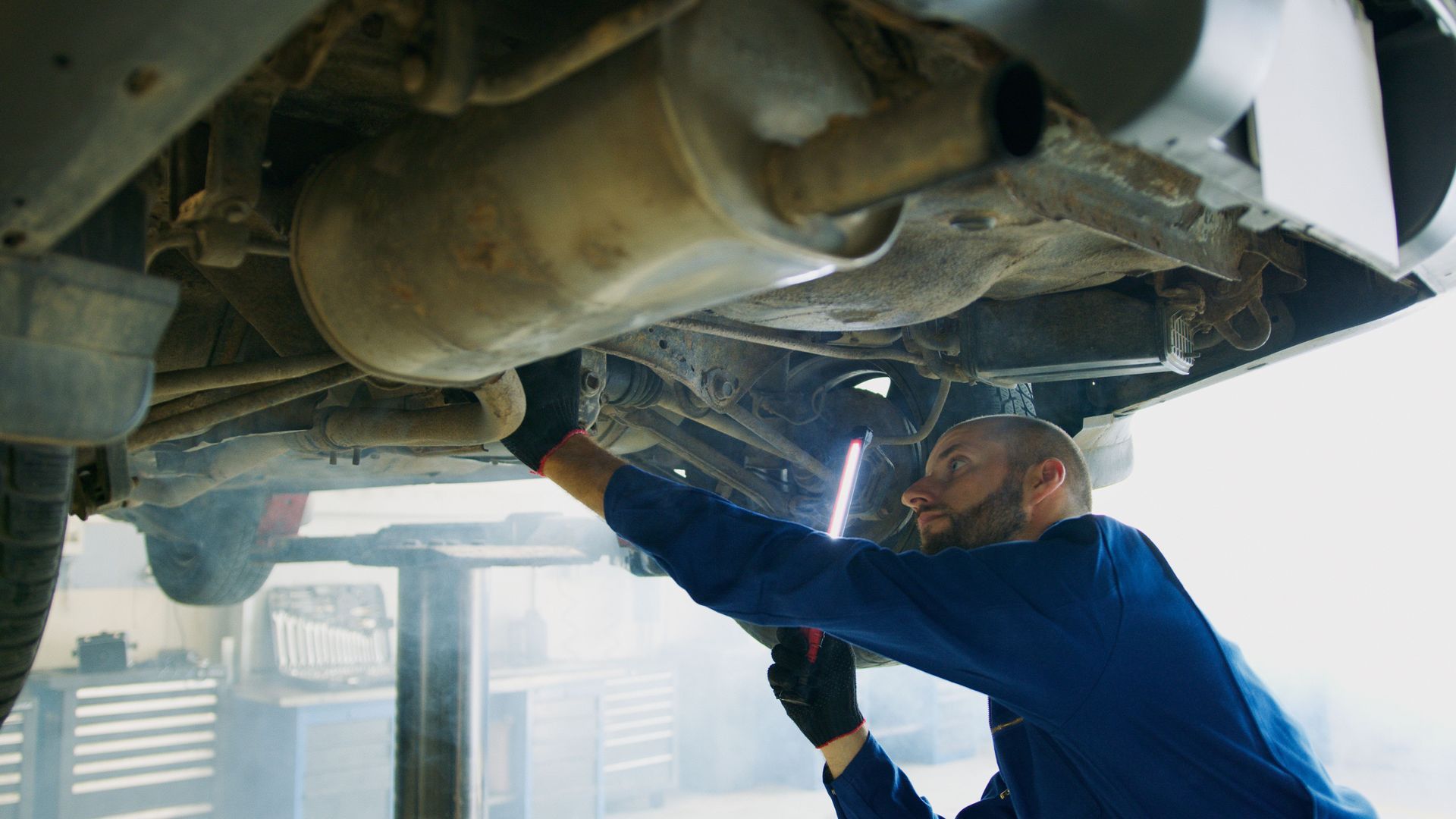
Exhaust inspection involves lifting the vehicle, visually examining each joint and component for rust perforation, testing seals at flanges and clamps, and identifying which sections are actively leaking versus approaching failure due to visible corrosion. A noisy muffler often masks upstream leaks at the manifold or flex pipe that reduce engine efficiency and trigger check engine lights, so technicians trace exhaust flow from the engine back to confirm all leak points are identified before welding or replacing components.
Request a full exhaust inspection to identify all corroded sections before repair work begins.
Why Comprehensive Exhaust Evaluation Prevents Repeat Visits
Inspecting the full exhaust path from manifold to tip reveals whether corrosion is isolated to one component or has spread across multiple sections, preventing partial repairs that leave weakened adjacent pipes and hangers to fail within months. Technicians check manifold bolt torque and gasket integrity, inspect flex pipe for cracking, examine catalytic converter housings for impact damage and heat-related failure, test resonator and muffler bodies for internal baffle collapse, and verify hanger and clamp condition throughout the system.
Once exhaust repairs are completed, your vehicle runs quieter without the metallic rattle or rumble caused by leaks, exhaust gases exit only at the tailpipe rather than escaping under the cabin, and emissions sensors receive accurate readings that prevent false check engine codes. You no longer smell exhaust fumes during idle or detect vibration from loose components, and the system passes Maryland emissions inspection without secondary air or catalyst efficiency faults.
Exhaust repair quotes include all sections requiring replacement or welding, with technicians explaining which components are actively leaking versus showing corrosion that will likely fail soon. This documentation helps you decide whether to address only immediate leaks or replace the full system to avoid returning for additional sections within the next year.
What Property Owners Usually Ask
Exhaust repairs often generate questions about how much of the system needs replacement, whether welding is sufficient, and why Shore vehicles corrode faster than expected. These answers address common concerns from drivers in Salisbury and surrounding communities.
What causes exhaust components to rust faster on the Shore?
Salt air from the Bay and high humidity accelerate oxidation on steel exhaust pipes, particularly where moisture collects at low points in the system and where road salt spray contacts undercarriage components during winter months.
How do technicians decide whether to weld or replace exhaust sections?
Welding is effective for isolated rust perforations in otherwise solid pipe, but when corrosion has thinned pipe walls, compromised flanges, or spread across multiple sections, replacement ensures the repair lasts without follow-up failures in adjacent areas.
Why does my exhaust leak get louder during acceleration?
Increased exhaust pressure during acceleration forces more gas through leak points, amplifying the metallic rattle or roar from perforated pipes, failed gaskets, or cracked flex sections that remain quiet at idle.
Can I drive with a small exhaust leak or should I repair it immediately?
Small leaks allow exhaust gases to escape before reaching oxygen sensors, triggering check engine lights and reducing fuel efficiency, while leaks near the cabin introduce carbon monoxide risk—early repair prevents these secondary issues from developing.
What does a full exhaust inspection include?
Technicians lift the vehicle, inspect every component from manifold to tailpipe for rust perforation and corrosion, test flanges and clamps for seal integrity, check hanger condition, and identify all current and pending failure points before providing a comprehensive repair quote.
Rondell's Auto Inspections & Sales inspects exhaust systems from manifold to tailpipe before quoting repairs, so drivers across the Eastern Shore receive comprehensive correction rather than partial fixes that fail again. Arrange an exhaust inspection to identify all corroded sections and receive a repair plan that addresses the full system.